


−22%
Promoted
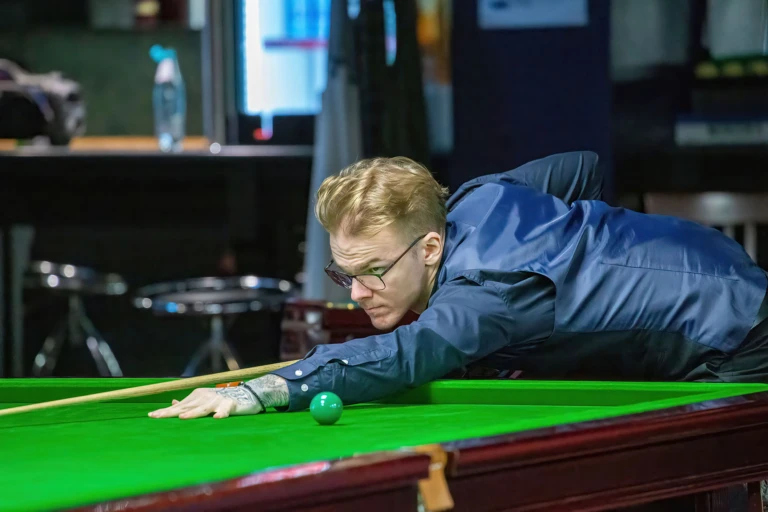
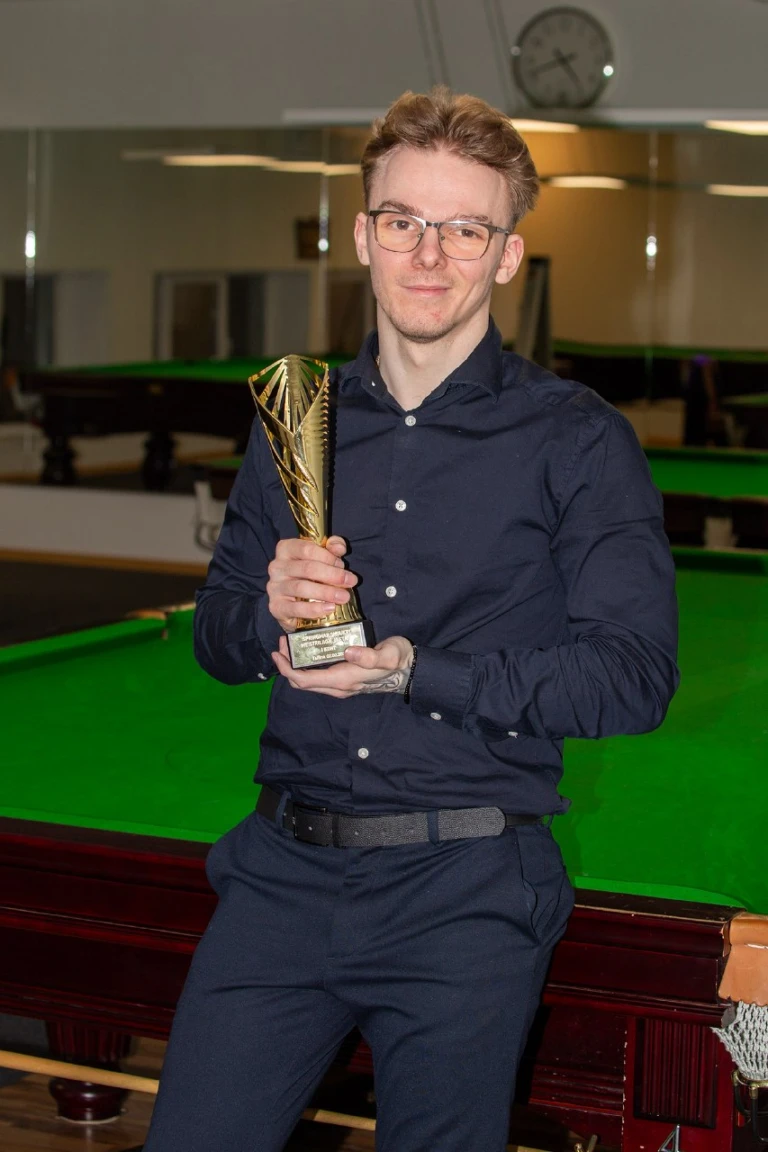

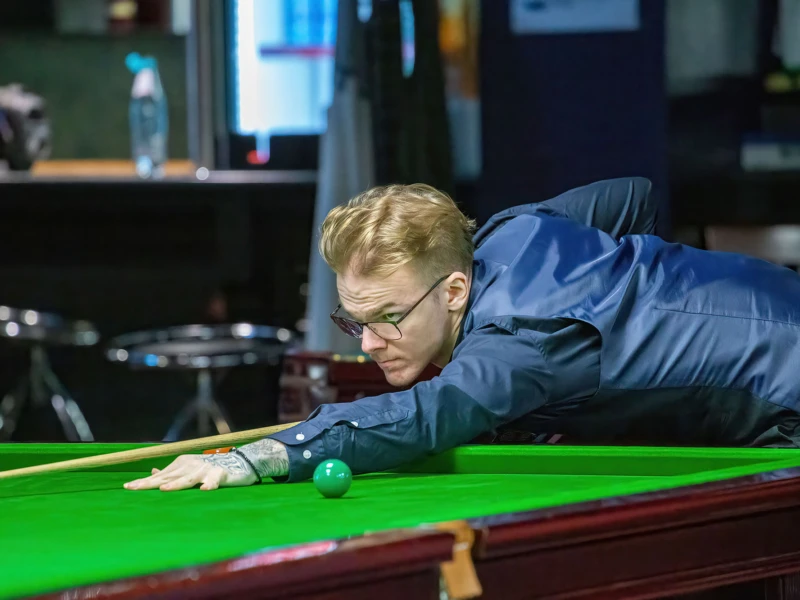
Snooker looks like a slow, quiet game, but behind the calm is a precise cue action and planning several shots ahead. Here is how snooker differs from pool and Russian billiards, how a beginner should start and what lessons cost in Tallinn.
In short. Snooker is played on a large table with 22 balls; you score by potting a red and then a colour, in turn. You need no experience to start: the easiest way in is one-to-one lessons with a coach. In Tallinn a private session costs from €15 an hour, and the table is paid separately at the club’s rates.
Snooker uses 22 balls: the cue ball (white), 15 reds and 6 colours. A red is worth 1 point, the colours 2 to 7:
A player pots a red, then any colour, then a red again — and so on while reds remain on the table. Potted colours go back to their spots. Once the reds are gone, the colours are potted in order of value, from yellow to black. A run of shots without a miss is called a break; the maximum break is 147.
The snooker table is the biggest of all billiard tables: the playing area of a full-size table is about 3.57 × 1.78 m. The balls are small (52.5 mm) and the pockets narrow and rounded, so snooker is above all about accuracy and leaving the cue ball in the right place for the next shot.
The good news: all three share the same basics — stance, grip and a straight cue action. Learn them in snooker and you will play pool and Russian billiards with confidence too.
Take your first sessions with a coach rather than on your own: a wrong stance or cue action quickly becomes a habit, and unlearning it takes longer. The first lessons usually cover:
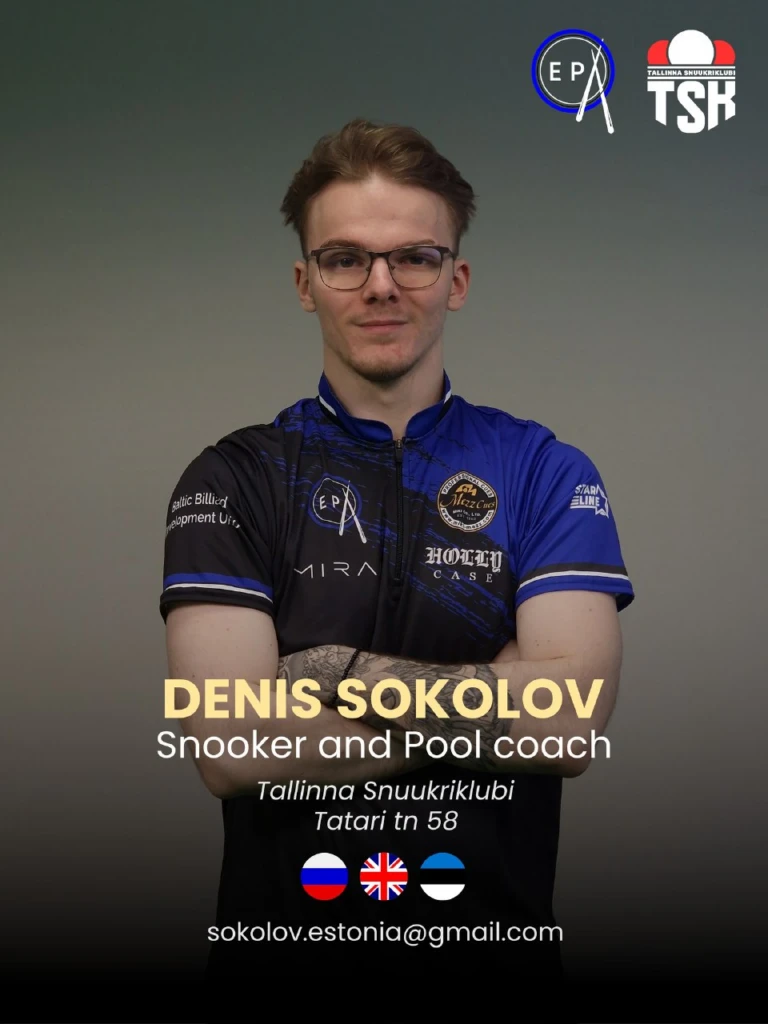
On Levio, private billiards and snooker sessions with coach Denis Sokolov cost (prices at the time of publication):
| Format | Price |
|---|---|
| 1 session, 60 minutes | €15 |
| 1 session, 90 minutes | €20 |
| Course: 4 sessions of 90 minutes | €75 |
| Course: 6 sessions of 60 minutes | €80 |
| Course: 8 sessions of 90 minutes | €140 |
| Course: 12 sessions of 60 minutes | €150 |
The table is paid on top of the session at the club’s rates. Sessions you buy stay valid for 90 to 365 days, depending on the format, so you can take a course at your own pace.

Your coach — Denis Sokolov
Private billiards and snooker sessions in Tallinn for beginners and amateurs. Lessons in English, Estonian and Russian.
Sessions are one-to-one, in English, Estonian or Russian. Times: weekdays 18:00–22:00 and weekends 11:00–17:00; the exact day and hour are agreed with the coach.
Comfortable shoes and clothes you can move in: in the stance you bend low over the table. Check with the coach in advance whether the club has cues for lessons — you don’t need to buy your own cue for the first sessions.
No. The lessons are also for people who have never held a cue.
No, the table is paid separately at the club’s rates.
It depends on your goal and how often you practise. Courses of 4–12 sessions are a good start: the technique builds from one session to the next.
Yes, the coach teaches in English, Estonian and Russian.
We have sent a link to . Open it to activate your account, then sign in.
No email? Check the spam folder, it can take a few minutes.
Sign InWe have sent a link to set a new password to .
No email? Check the spam folder, it can take a few minutes.
Sign In
Comments